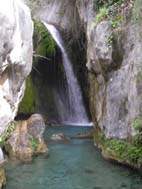
A museum and heritage centre located in a former tin mine in western Cornwall, the Geevor Tin Mine is a great place to visit if you are in the Penzance, St Just area. Learn a little about the historic tin mining industry, you can take the underground tour, visit the Hard Rock Museum, take a look down the Victory Shaft, visit The Dry, left as it was when the mine was operational, or try your hand at mineral panning an see what you can find. Located near to the village of Pendeen, north of St Just, the Geevor Mine is open Sunday to Friday.
December 29, 2010
December 8, 2010
Chesham Buckinghamshire
The largest town in the Chiltern District of Buckinghamshire, lying in the south-east of the county, Chesham is a market town situated in a steep sided valley at the source of the River Chess. A progressive town with a population of around 20,000, Chesham is a popular commuter town which is on the London Underground line (Metropolitan), giving good access to the capital. Chesham holds a market twice a week, much as it has done for centuries, and a more recent addition, the Elgiva Theatre attracts thousands of visitors to the town, providing much needed entertainment for both its residents and those living nearby. Surrounded by wide expanses of beautiful countryside, Chesham offers plenty of opportunity for walking and cycling, while providing a relaxed and friendly shopping experience for those choosing to stay in the town centre. Places of interest nearby include the Hertfordshire village of Bovingdon, which holds a well known Saturday market on its disused airport, on the same airport you can try out paintballing or watch banger racing, should you wish, and also the pretty village of Ashley Green, a charming place to spend an hour or two.
December 6, 2010
Abbotsbury Dorset
A picturesque, and peaceful rural village located inland of Chesil Bank, in the county of Dorset, England, Abbotsbury attracts many thousands of visitors each year, who not only arrive to enjoy the charm of the place but also to see the famous Abbotsbury Swannery and also the nearby Subtropical Gardens. The Swannery was established by Benedictine Monks, hundreds of years ago, and now visitors can feed over 600 friendly mute swans and walk amongst these extraordinary birds. The Abbotsbury Subtropical Gardens were established by the Countess of Ilchester in 1765 and contain many rare and exotic plants over an area of 20 acres of Dorset countryside.
December 3, 2010
Gulliver’s Land Milton Keynes
To entertain the kids on a visit to Milton Keynes in Buckinghamshire, pay a visit to Gulliver’s Land, a children’s theme park, located at Newlands, just outside the town. Perfect for a day out especially when the weather is fine, Gulliver’s land boasts 7 distinct sections, Toy Land, Lilliput Land, Junior Discovery Cove, Adventure Land, Discovery Bay, Lilliput Land Castle and Main Street, and offers lots to keep the kids amused for a few hours. Standard entry prices fro 2010 are £13.50 for both adults and children, and a daily passport is £49.99. To find Gulliver’s Land, head for the Willen Lake area of Milton Keynes, and follow the brown Gulliver’s Land signposts.
November 25, 2010
Boroughbridge and Aldborough Yorkshire
For many centuries, an important river crossing over the River Ure in North Yorkshire, the small town of Boroughbridge is worth a visit if only to view the standing stones which are located on the edge of the town, and are known as the Devil’s Arrows. Dating from the Bronze Age, the Devil’s Arrows are 3 millstone grit menhirs reaching a height of 22 feet. The nearby village of Aldborough was previously more important than Boroughbridge, and has a Roman history, being the former settlement of Isurium Brigantum. The river crossing around which Boroughbridge grew, was moved from Aldborough by the Normans in the 11th century, reversing the importance of the two Yorkshire places.
November 23, 2010
Keswick Lake District Cumbria
A popular tourist destination standing beside Derwent Water in the Lake District, Cumbria, north-west England, Keswick is in an area of great natural beauty, and attracts thousands of visitors each year, as it has done for many decades. Formerly attractive to the Romantic poets of the Victorian era, Keswick attracted the likes of Wordsworth and Coleridge, who visited for the inspiration that the beautiful Lake District scenery provided. Close to Keswick, you can visit the Castlerigg Stone Circle, an ancient monument probably dating from the Bronze Age, and over one hundred feet in diameter, when the weather is pleasant head along to Derwent Water and maybe take a boat trip on the lake, or visit the Theatre on the Lake and watch one of their fine performances.
November 22, 2010
Appleby in Westmoreland Cumbria
Situated in the beautiful valley of the River Eden in Cumbria, the town of Appleby is the location of a famous Horse Fair, which is held in June every year, this colourful event attracts many thousands of visitors, especially gypsies, who descend on the town from all over Britain. Appleby Castle was formerly the home of Lady Anne Clifford, and was restored to its former glory by her, after being damaged during the English Civil War. The St Lawrence church in Appleby contains the tomb of Lady Anne Clifford who died in 1678. The River Eden flows through the town and when the weather is fine is a terrific place to do some walking. Appleby is located to the east of the Lake District and the areas around the town are peppered with tiny hamlets such as Reagill, Sleagill, Burrells and Murton.
Ampleforth North Yorkshire
Situated in the Ryedale district of North Yorkshire, the small village of Ampleforth stands on the southern fringes of the North Yorks Moors National Park, and is a perfect base for touring this area of great natural beauty. With its population of 888, Ampleforth is only a tiny village, though it has some history, and its parish church dates from Saxon times, it also has a abbey (Ampleforth Abbey), which is located about a mile from the village centre. Ampleforth is about 20 miles drive from the city of York, and nearby places include, Yearsley, Grimstone and Fritton, head into the North Yorks Moors, and you will find the hamlets of Wass and Oldstead .
November 15, 2010
Skipton North Yorkshire
A market town located in the Craven district of North Yorkshire, Skipton is often referred to as “The Gateway to the Dales”, due to its position at the southern tip of the Yorkshire Dales, an area of great natural beauty. Dominated by its medieval castle, which was originally built by the Normans, Skipton has a number of interesting places to visit including the George Leatt Industrial and Folk Museum, the Craven Museum, and the High Corn Mill, a restored mill building. When the weather is pleasant be sure to take a stroll along the towpath of the Leeds and Liverpool Canal, which runs through the town. Skipton is approximately 27 miles from Leeds.
November 11, 2010
Hertford Hertfordshire
A town and parish located in the county of Hertfordshire, England, Hertford has a population of around 24,000 and a history going back to Anglo-Saxon times, when it acquired its name which no doubt refers to its position on a ford over the River Lea, where harts (or stags) would have crossed. First recorded as a town in 673, Hertford was a significant town by the time of the Norman conquest, having mills, churches and markets already established. The Normans built a castle in the town and there was also a priory erected, which remained until the dissolution of the monasteries in the 16th century. Hertford grew prosperous over the centuries and especially after the arrival of a canal in 1767 and the railway in the mid-nineteenth century. Hertford has been the county town of Hertfordshire since Saxon times, and has retained its importance in the affairs of the county. Major landmarks in the town include Hertford Castle, with some original sections, the Robert Adam designed Shire Hall (1779), Wallace House, the Corn Exchange and the Hertford Museum. Hertford lies at the confluence of four rivers, them main one being the River Lea, and when the weather is fine there can be no better way to spend a few hours than to take a stroll along the river, or even hire a boat and cruise along the river itself.
November 10, 2010
Moraira Costa Blanca
An attractive town on the northern Costa Blanca, Spain, Moraira is located just a few miles from Javea. Up to around forty years ago Moraira was little more than a few fishermens cottages, sitting along the sea front. Although a marina and a number of urbanizations have since been built, the town has still retained much of its original quaint charm, most of the property in the area comprises isolated detached villas set amongst trees and vegetation. The beaches of Moraira have decent sand and warm, clear water, and are the ideal place to enjoy the wonderful Moraira weather, which is mostly sunny and dry throughout the year. The main beach of Moraira, Playa de L’ Ampolla, is within easy walking distance of Moraira’s town centre but it can get very busy during the summer season. A little to the south is the excellent beach of the Platgetes which is lined by a promenade. There are several pretty bays along the coast around Moraira, some of which are very rocky, making them perfect for snorkeling or diving. One of the finest coves is the Cala Punta Estrella, which can be accessed via steps dug into the cliff face. The pretty marina which is located close to the town centre and has over six hundred berths. Moraira is a desirable location for the purchase of holiday property and has also seen many expats settle permanently in the resort over the last 30 years or so.
November 8, 2010
November 7, 2010
Southend on Sea Essex
A large seaside resort and working town located on the Thames Estuary in Essex, Southend-on-Sea has been a popular resort since the early 19th century. Originally just a group of fishermen’s cottages at the southern end (south end) of the ancient village of Prittlewell, the town now takes in some 7 miles of coastline, pretty much swallowing up the areas of Westcliff, Prittlewell and Leigh-on-Sea, and has a population of around 165,000. Famous for its pier, which at one and a third miles long, is the world’s longest, Southend reached its zenith in the 1960’s and 1970’s, when it was particularly popular as a day tripper resort. The beach which can get quite busy when the weather is fine, is a mixture of shingle and sand , with a good helping of mud thrown in, due to its estuary location. As well as the beach and pier, Southend also has plenty of green areas, with over 1,000 acres of parks and gardens.
November 3, 2010
Cambridgeshire Attractions
A county in eastern England, well known for its Fens and its University city, Cambridgeshire has plenty of attractions for anyone planning to visit the county. The Fens which were once unusable and inhospitable, have long since been drained and now provide large areas of productive arable land that produces vast quantities of vegetables and fruit. A good first choice of places to visit would be Cambridge itself, the beautiful University city with large numbers of historic buildings, its Peterhouse College was founded in 1284, attractions in the city are many and varied, but you could choose from the Fitzwilliam Museum, the Cambridge Museum of Technology, and Cambridge University Botanical Garden. From Cambridge you could head for Ely, where one of the most beautiful cathedrals in England resides, dating from the early 11th century this stunning cathedral is a must visit place in Cambridgeshire, while in Ely you could also take a look at the Bishop’s Palace and the King’s School. From Ely, you could next head for Wisbech, famous centre of the spring bulb industry, this charming riverside town has some fine Georgian architecture, which makes it well worth a visit. In Wisbech head for Peckover House, a National Trust run property, built in 1722, it has superb interiors and a beautiful Victorian walled garden. From Wisbech you could head west to the city of Peterborough, standing on the River Nene. This city which is the centre of England’s brickmaking industry has a long history and another beautiful cathedral, this one built in the 12th century, and the burial place of Catherine of Aragon. Peterborough Cathedral boasts a magnificent west façade in Early English Gothic style. From Peterborough you could go next to Huntingdon (to the south of Peterborough), a charming town on the River Great Ouse, here you could take a look at the Cromwell Museum, ensconced in a former school in which the former Lord Protector of England was educated. Oliver Cromwell was actually born in Huntingdon and there are many references to him in the town, other places to visit include Hinchingbrooke House, originally an 11th century nunnery which later became home of the Cromwell family, and Huntingdon Racecourse where you can watch some excellent horse racing. From Huntingdon an obvious next stop would be St Neots, named after a Cornish monk (St Neot), this pretty town on the River Great Ouse has some delightful old coaching inns and a cathedral like church dating back to the 12th century. This concludes our brief tour around Cambridgeshire, I shall be back soon to write about other places in the county.