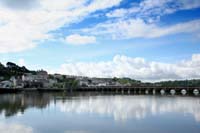
For two centuries from 1550 to 1750, Bideford was the principal port of north Devon and was also a centre for shipbuilding. Bideford’s 15th century long bridge over the River Torridge, was originally from the 13th century, and comprises 24 arches all with different spans, it connects the original old town with the area known as East-the-Water. The long tree-lined quay is still at the heart of life in Bideford and attracts many visitors to this popular Devon town. Other attractions include the Burton Art Gallery and Museum, and the Pannier Market, held on Saturdays and Tuesdays, a great place to visit if the weather is fine. In the disused railway station at East-the-Water, you can visit the Tarka Trail information centre, housed in a converted railway carriage. If you are enjoying sunny weather during your visit you could also head for the beach at Westward Ho!, to the north of Bideford.
June 14, 2010
Sardinia
What can you expect from a holiday on the Italian island of Sardinia? Well apart from top hotels, superb shops and first class restaurants there is also an unusual mix of cultures and traditions, plenty of as yet unspoilt beaches where you can enjoy the wonderful Sardinia weather in little company but your own, taste some of the fine local wines for which Sardinia is famous, or enjoy its varied landscapes and wildlife. This Italian island with is difference will always surprise and enchant visitors with its beauty and charm, and you will surely want to visit again and again.
May 18, 2010
Mijas Golf Costa del Sol
One of the most popular golf destinations on the Costa del Sol in Andalucia southern Spain, Mijas Golf actually comprises 2 golf course built at different times and designed by Robert Trent Jones. The first built of the golf courses was Los Lagos (named after its numerous water hazards), a fine par 71, 18 hole golf course with wide fairways, big greens and a playing length of 6,007 metres. The second built was Los Olivos (named after the large amount of olive trees lining the fairways), an undulating course with many bunkers, Los Olivos is par 72 and has a playing distance of 5,866 metres. The town of Mijas is one of Andalucia’s “white villages”, built on a hillside overlooking the Costa del Sol coastline, its coastal section Mijas Costa is adjacent and almost joined to the resort of Fuengirola. The region enjoys a fine climate and Mijas weather is excellent for all year round golfing although the cooler winter months are more popular. Mijas Map.
March 12, 2010
Ibiza Travel in the Balearic Islands
Second largest of the Balearic Islands of Spain, Ibiza has much to offer travellers of all ages and tastes, known as the clubbers capital of Europe, away from the main resorts it is still a mostly rural island with large areas of unspoilt countryside and huge areas of fig, almond and olive groves. Ibiza travel can be a pleasurable experience whether you are seeking a cultural sojourn or a traditional beach holiday, for culture and history you can head for the capital Ibiza Town (Eivissa), founded by the Phoenicians in the seventh century BC, it is now a UNESCO World Heritage site, its Dalt Vila (Upper Town) is a joy to behold, and is the oldest part of the city, visit the 16th century cathedral located on what has been the site of religious buildings since 283 AD, and the ancient fortifications also dating from the 16th century in their present form. For beaches, and Ibiza has over 50, head for the beautiful west coast, where unspoilt beaches lay in picturesque coves, or the area around Santa Eulalia where you can also visit the famous Hippy Market at Es Cana or simply enjoy the delightful Ibiza weather. Clubbers can head for San Antonio, where this former fishing village offers a wide choice of clubs and discos. Ibiza travel should be fun, try a little of everything to get an idea of what this beautiful island has to offer. Ibiza Map.
March 3, 2010
History of Lloret de Mar Catalonia
One of the oldest established and best known coastal resorts along the Costa Brava in Spain, Lloret de Mar has the appearance of a modern holiday resort with some great family orientated facilities. The town however has a long and distinguished history with settlements recorded in the area since the times of the ancient Iberians way back in the third and fourth centuries BC. The Romans considered it important enough to establish a trading post in Lloret de Mar (although of course it was not called this at the time) during their time in the region, and much later a castle was built for the protection of its inhabitants, enabling them to live closer to the sea, a previously dangerous area due to pirate attacks. From about the early 11th century it took on its present name of Lloret which is though to have come from the Latin for ‘place of laurels’. After Spanish exploits in the New World, Lloret de Mar became an important area for shipbuilding and trade, its sailors heading off for such places as Uruguay, Argentina and Cuba, bringing back many riches making the town wealthy and establishing its ‘Americanos’ as these travellers became known. The 20th century saw the arrival of tourism in Lloret de Mar and it is this modern industry which predominates in the town today. The fine beaches, great weather and excellent facilities are what attract visitors to present day Lloret de Mar.
February 22, 2010
Salou and Cambrils Costa Dorada

Salou Costa Dorada
Two of the best loved resorts on the Costa Dorada coastline of Catalonia, Spain, Cambrils and Salou could not be more different. Salou, the typical Spanish holiday resort, aimed at package holidays and especially British tourists, Cambrils the traditional Spanish fishing town, retaining much of its old charm and attracting a larger number of Spanish nationals rather than International tourists. Cambrils has plenty of sand for the traditional beach style holiday, but is especially renowned for its seafood restaurants which are supplied by local fishermen who land their daily catch in the harbour much as they have done for many centuries. Cambrils has a long history, but has hung on to its traditions and not been spoilt by over-development, the old town still has narrow cobbled streets and the air of a Catalonian fishing village. Despite its modern look and feel, Salou too has a long history and was actually first settled by the Greeks over 2,000 years ago, it was also a Roman settlement as the Romans set out from nearby Tarragona to conquer the Iberian Peninsular, it grew as a tourist resort during the 1960’s and expanded with little regard to aesthetics, becoming a sprawling mess of apartment blocks and high-rise hotels. Salou is still popular however, with those seeking a particular style of holidays and being provided with everything they need in that regard – lots of entertainment, plenty of sandy beaches, amusements and sports activities, in fact there is so much to do that obtaining a car hire vehicle is advisable to get the most from your visit. Salou is the location of the large Port Aventura theme park, one of the largest of its kind in Europe. Both resorts enjoy a wonderful climate which is of course one of the major draws for tourists, the weather in Salou and Cambrils is generally warm and sunny in the summer months and mild during the winter. Map of Salou.
February 20, 2010
Vilamoura Algarve Portugal
One of Europe’s largest beach resorts, Vilamoura on the Algarve, Portugal, is a built for tourism complex some 14 miles west of Faro. Covering an area of around 20 square kilometres, Vilamoura is built around its huge marina, where there are moorings for over 1,000 boats and numerous large luxury hotels for accommodation in the resort. The development of Vilamoura began in the 1970’s, with an emphasis on sports facilities, very popular with golfers, there are 6 golf courses in the immediate area. Water sports too, are a big attraction with sailing, scuba diving, windsurfing, water-skiing, fishing and parasailing all well catered for. The wonderful Vilamoura weather is of course one of the main attractions of the resort, as is the fine sandy beach which extends for some three kilometres, those looking for a bit of culture may want to head north of Vilamoura beach, where some Roman remains remind visitors of the areas rich history. Vilamoura Map.
Villajoyosa Benidorm Costa Blanca
Well worth a visit if you are travelling around the northern Costa Blanca in Spain, the town of Villajoyosa, located a few kilometres south of the huge holiday resort of Benidorm, is one of the prettiest in the region. Well known for its multi-coloured houses, Villajoyosa is an old fishing village, turned holiday resort, it has several fine beaches and a charming fishing harbour, where you can watch the locally caught fish, landed and auctioned off. Whilst in Villajoyosa be sure to visit the chocolate factory and the chocolate museum, for this is one of Spain’s major chocolate producing towns, its turron and chocolate delicacies well known throughout Europe. If you can pick your time to visit, try to coincide with a local fiesta, so that you can join in with local customs, the Fiesta de San Isidore is held in May, and in September, a fiesta in honour of the Archangel Michael takes place. If you are visiting between May and October you can expect the Villajoyosa weather to be sunny and dry, as the town experiences over 300 sunny days each year. The nearest airport for Villajoyosa is at Alicante, if you are hiring a car and need a road map you will find a useful one here: Alicante Airport Map.
February 14, 2010
The Algarve Region of Portugal
The beautiful region of Algarve in southern Portugal is one of Europe’s most popular holiday destinations and rightly so as it a stunning area of coastline with some fine resorts. The capital of the Algarve region is Faro, and it is here that you will find the main airport for the region, once a fishing port and trading centre called Ossonoba. If you are arriving for your visit to the area by air, you will no doubt be arriving at Faro Airport and this is the best place to pick up a car hire vehicle for your stay. To the west of Faro is the resort town of Albufeira, dating from Roman times it still has some remains from these ancient times, in recent years it has grown considerably and is now one of the regions most visited resorts. Another resort experiencing rapid growth is Quarteria, formerly a small fishing village, it is now a bustling resort with a fine beach and a very long promenade. While prices in the area have risen with its popularity it is still possible to pick up some bargains and suitable products are leather goods, pottery and decorated tiles. The Algarve experiences a splendid climate with some of the best weather in Portugal, summers are hot and winters mild, rainfall is mostly experienced during the winter months. Other places that you might choose to visit whilst in the region include Portimao, Lagos, Sagres, Praia da Rocha, Carvoeiro, Tavira and Luz. You can view a map of the country here, the Algarve region is in the far south. Portugal Map.
February 4, 2010
Lloret de Mar Costa Brava
The history of Lloret de Mar is forever linked to the sea, the Iberians settled in the areas of Montbarat and Puig de Castellet and established trade with the Greeks and Romans, and the Romans themselves founded a trading post in what is now Lloret. The name Lloret lo Redo first appears in 966 AD deriving from Lauretum (place of laurels). At the beginning of the 16th century a new church was built in Catalan Gothic style and completed in 1522, the church served as a refuge from pirate attacks. With the discovery of the New World, many of Lloret’s sailors went to the Americas, resulting in a growing import and export trade with the colonies. After the collapse of Spain’s Empire, Lloret de Mar went into a period of decline and it was not until the increase in tourist activity in the 20th century that the town recovered and became what it is today, a popular seaside resort along the Costa Brava coastline of Spain. Though the towns population is only around 30,000, this rises to over 200,000 during the busy summer season, when the weather is excellent, as many holidaymakers arrive to stay in the many hotels such as the Lloret de Mar Oasis and the Costa Encantada Aparthotel. Lloret de Mar has a vibrant nightlife scene and attracts the younger set especially Germans, Dutch and Belgians. Also attractive to visitors is the fine beach and excellent range of facilities. Map.
February 1, 2010
Vinaros Costa del Azahar
An ancient fishing port in the Castellon province of eastern Spain, Vinaros was originally just a small hamlet founded by the Moors near to the coast. Developed as a port after the Christian reconquest, Vinaros survived largely through fishing and later vine growing. Its municipality includes some 12 kilometres of Costa del Azahar coastline, beginning at the River Senia and ending at Aiguadoliva, it includes numerous small coves and some excellent beaches, which are of course attractive to modern day tourists, who now provide an alternative income for the town. Renowned for its seafood and in particular its king prawns, Vinaros is a great place to try out some traditional Valencian dishes, in an attractive setting. Vinaros enjoys some wondeful weather, especially during the months May to October. Along the main promenade visitors will find plenty of bars, restaurants and hotels, further afield there are lots of attractive walks to enjoy, a visit to the harbour, is of course a must and here you can watch the fishermen arrive with their daily catch. Vinaros Map.
January 22, 2010
Barnsole Vineyard Canterbury Kent
If you are visiting Canterbury in Kent, United Kingdom this year, and are looking for something a little different to do, why not try a visit to the Barnsole Vineyard, a family run vineyard which produces high quality wines and welcomes visitors for free wine tastings and a guided tour of the vineyard which covers an area of just 3 acres. Open from April to October when the Canterbury weather is at its best, a charge of just £1.50 per person is asked for a guided tour of the vineyard, you can also purchase wine on the premises. The Barnsole Vineyard is located on Fleming Road, Staple, Canterbury and the telephone number is 01304 812 530. Why not take out an hour or two to visit this interesting and different Kent attraction. Canterbury Map.