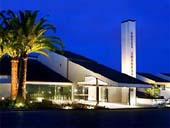
One of the popular resorts of the Costa Tropical in Andalucia, Spain, Almunecar has a history going back to the times of the ancient Phoenicians, whe a settlement was founded there, called Sexi. Later the Romans built an aqueduct in Almunecar, remains of which can still be seen to this day. Looking down on the old town of Almunecar is a Moorish castle, reminding present day visitors of the town less peaceful times. These days Almunecar is a much visited coastal resort and holiday destination with a greyish sand beach, decent hotels, and the usual facilities expected of a modern holiday resort.
June 22, 2010
June 18, 2010
NH Sotogrande Hotel
One of the most popular hotels in the Sotogrande region of Andalucia, Spain, The NH Sotogrande Hotel comprises 106 modern rooms which you will find very comfortable during your visit to the area. The hotel is located near to the shopping centre and sports complex of Sotogrande and is within easy driving distance of at least five fabulous golf courses, including the world famous Valderrama Golf Club. The NH Sotogrande has a terrific outside swimming pool with plenty of sunbathing areas for relaxing in the sun, its restaurant enjoys spectacular views of the Mediterranean Sea. The largest private residencial area in Andalucia, Sotogrande is a luxurious area boasting some very expensive properties and is a playground for the wealthy and famous. Sotogrande is located between Estepona and San Roque and is around 25 kilometres from Gibraltar airport. You can book the NH Sotogrande Hotel by clicking on the link below, other hotels are also available in and arount the resort.
April 17, 2010
Marbella Costa del Sol
Famous as a playground of the rich and famous, the resort of Marbella located on the Costa del Sol, Andalucia, Spain has a population of over 125,000, which of course increases considerably during the busy summer months, and a municipal area of some 114 square kilometres. Situated in the province of Malaga, Marbella and its neighbour Puerto Banus, has long been a sought after destination for wealthy visitors from Northern Europe. Marbella is also popular with golfers, and there are numerous fine courses in the immediate areas around the resort, other sports which thrive in the town include tennis and all sorts of water sports. Only as long ago as the 1940’s, Marbella was just a small fishing village with less than one thousand residents, it grew when Prince Max Egon zu Hohenlohe-Langenburg bought land in the area and opened the Marbella Club Hotel, attracting a higher class of visitors to this part of Spain. Marbella has some 27 kilometres of coastline and over 20 beaches to explore and enjoy, the climate is fantastic with the weather in Marbella being sunny and dry for most months of the year and very reliable between the months of May and October. Marbella is around fifty kilometres from Malaga and its International Airport. Marbella Map.
March 12, 2010
Huelva Costa de la Luz
The most westerly city on the Costa de la Luz, Spain, Huelva was founded by the Phoenicians in around 1000 BC. Originally known as Onoba, Huelva was later controlled by the Romans and became part of the province of Hispania Baetica, the Romans established a mint there and coins were produced bearing the name “Onuba”. In the 15th century the explorer Christopher Columbus sailed from nearby Palos de la Frontera, and the discovery of the Americas brought increased wealth to Huelva, though it was generally overshadowed by the more important city of Seville. Significant mineral deposits in the region led to Huelva becoming the home of the well known Rio Tinto Company, a British mining concern which set up shop in the Odiel estuary and subsequently exported its products throughout the civilised world. Huelva fell into decline after being devastated by the great Lisbon earthquake of 1755, though it has always been a significant port for the region. Located on a stretch of coast known as the Costa de la Luz (Coast of Light), Huelva is experiencing an increase in tourist activity as this less well known piece of coast attracts more and more visitors to its virgin beaches, as yet untouched by mass development. Enjoying a wonderful climate with Huelva weather being somewhat cooler than the neighbouring Costa del Sol, enjoying cooling Atlantic breezes and having a similar climate to Portugal’s Algarve to the south-west. Huelva is located just off the A-45 motoway between the Portuguese border and the city of Seville. Map.
March 4, 2010
Fuengirola Costa del Sol
A popular beach resort located on the Costa del Sol coastline of Andalucia, southern Spain, Fuengirola attracts thousands of holidaymakers throughout the year, who arrive to make use of the fabulous sandy beaches, fine sporting facilities, good quality hotels and vibrant nightlife scene. Fuengirola began its life as a holiday resort back in the 1960’s and continued to expand until the present day, perhaps a little too much as along with Torremolinos and Benalmadena, has a bit of a reputation as a concrete jungle. The majority of visitors however spend the bulk of their stay in the resort, enjoying the five mile long sandy beach and basking in the terrific Fuengirola weather which the resort experiences. There is plenty of choice in accommodation with dozens of hotels on offer, there is also a wide variety of privately owned accommodation (apartments and villas) making it fairly simple to book a stay in the town.
November 20, 2009
Carmona Andalucia

Seville Gate Carmona
A historic town in south-western Spain, Carmona is situated in the Seville province of Andalucia and has a population of around 27,000. Gathered around a ridge overlooking Andalucia’s central plain, Carmona has a history stretching back to the times of the ancient Romans, and the remains of a Roman necropolis just outside the town are among its great tourist attractions today. Carmona was an important city around the time of Julius Ceasar, and continued to be important after the arrival of the Moors in Spain. The Moors built fortified walls around the town and built palaces and fountains within its walls. Arab control of Carmona ended in 1247 after Ferdinand III of Castille invaded and took the city back for the Christians. Modern day Carmona is a popular tourist destination with good road and bus links with the city of Seville, around 40km to the west. Carmona Map.
September 14, 2009
Velez-Malaga Costa del Sol
Known simply as Velez to the locals, the town of Velez-Malaga is the capital of the Axarquia district of the Malaga province of Andalucia in Spain. Located a little inland from the seaside area of Torre del Mar, Velez-Malaga is a significant market town surrounded by agricultural land where large quantities of olives, vines and salad crops are grown. The story of the town stretches back to pre-history and was no doubt settled prior to the Roman times when it was known as Menoba. Further expanded and developed by the Moors (who called it Ballix-Malaga) it became an important centre for trade and commerce. Its 13th century fortified castle overlooks the town from its lofty position on a hill, other places to visit include the Palacio de los Marqueses de Beniel and the 13th century Iglesia de San Bautista. Velez-Malaga Map.
Torremolinos Spain
Located about seven kilometres west of Malaga, the coastal resort and town of Torremolinos, was, forty years ago, just a small fishing village with little of note to attract visitors. Since the 1960’s Torremolinos has developed as one of the most popular resorts on the Costa del Sol and along with neighbouring Fuengirola and Benalmadena attracts hundreds of thousands of visitors each year. At one time having a reputation much like Benidorm, fish, chips and beer, Torremolinos is gradually evolving into a better class of resort and has some excellent shopping facilities, improved, clean beaches, and a very vibrant nightlife scene which of course appeals to the younger generation. There is of course plenty for visitors of all ages, with facilities for children and a huge range of bars and restaurants to suit all tastes. A big attraction is the wonderful Torremolinos weather, which is pleasant all year round, being especially hot and dry in the summer months and mild (watch out for the chilly wind though) during the winter. Easily accessed from Malaga airport, Torremolinos is an ideal location for the purchase of a holiday home or a rental investment property, and has a large expat community, making the Brits especially feel at home (but with sun!). Torremolinos Map.
Malaga Costa del Sol
Located in the Spanish region of Andalucia, Malaga is the 2nd largest city in that region, also considered as the capital of the Costa del Sol, Malaga has a long history going back to its founding in around 1000 BC when established as a trading port by the Phoenicians. Famous as the birthplace of the celebrated painter Pablo Picasso, Malaga has a number of interesting places to visit including the Alcazaba, the Roman Ampitheatre and the cathedral which was started in the 16th century. Having the main airport for the region of course Malaga in one way or another welcomes most of the visitors to the Costa del Sol, the main road from Granada passes by the city and the port is still a busy commercial centre as it has been for many centuries. To the south of Malaga lie the popular coastal resorts of Torremolinos, Benalmadena and Fuengirola, further south is Marbella, Malaga together with all of these resorts attract huge number of visitors each year, attracted by the fine beaches, the superb Malaga weather and the variety of interesting places to visit. Malaga Map.
September 13, 2009
Seville and Utrera Andalucia
A city with a population of around 700,000, Seville is one of the most important cities in southern Spain. Artistically, financially and culturally it is the hub of the region of Andalucia and is one of the most visited cities in Spain. Lying in the plain of the Guadalquivir river, Seville covers an area of 140 square kilometres and has a metropolitan population around double of that of the city itself. Historically, Seville is over two thousand years old and was called Hispalis during the Roman occupation of the Iberian Peninsular. There are still Roman remains to be found in and around Seville, one of the best known being the aqueduct. Following the collapse of the Roman Empire, Seville fell successively into the hands of Vandal, Visigoths and Moors, but it was the Moors who had the greatest influence on the city, and it became a significant centre under the control of the Umayyad dynasty. It came back under Christian control in the mid-13th century. These days Seville is a popular tourist destination with plenty to see and do all year round, although as Seville weather can be extremely hot during July and August, these months are perhaps best avoided if possible. Among the best known attractions in the city are the cathedral, built between 1401 and 1519, the Alcazar, begun in the 12th century, the Torre del Oro (Golden Tower), the Town Hall, and the Plaza de Espana. Outside the city of Seville itself are some other interesting places to visit, one you could consider might be the town of Utrera, one of the main agricultural towns of the region and the area where many of the bulls, reared especially for bullfighting are bred and tended. Utrera was overrun by Alfonso X in the 13th century, as he prepared for his defeat of Seville. Worth a look in Utrera are the 14th century castle, the Iglesia de Santiago church and the church of Santa Maria. Seville Map.
September 12, 2009
Ronda Spain
One of the most spectacularly situated cities in Spain, Ronda lies on both sides of the Rio Guadalevin, joined by three picturesque bridges, a stronghold of the Moors, it was not freed by the Christians until 1485. A must visit place for those holidaying on the Costa del Sol coastline, Ronda is located about 100 kilometres from the city of Malaga in the region of Andalucia. The spiritual home of bullfighting, Ronda has one of the oldest bullrings in Spain, built in 1785 it attracts bullfighting fans from all over Spain and in fact the world. Ronda Map.
September 11, 2009
Nerja Caves
If you are visiting the Andalucian coastal town of Nerja this year, be sure to take time out for a trip to the Nerja caves, a series of subterranean caverns located to the north-east of the town, used for human habitation some 20,000 years ago. The caves are now often used for holding concerts, which make the most of this natural ampitheatre’s fine acoustics. The Nerja caves were discovered by a group of pot-holers in 1959, the caves, divided into two major sections are open to the public who enter by way of a series of stairways and pathways. More info on Nerja: Nerja Factfile.
Torrox Andalucia
One little town which is worth a visit if you are travelling to the Costa del Sol region of Andalucia in Spain, is the historic town of Torrox. Together with its coastal limb Torrox Costa, the town has a history going back to the Roman occupation of the Iberian Peninsular, when it was developed as a factory town. In Torrox Costa there are still remains of a Roman villa, a necropolis and also a thermal baths, however Torrox Costa today is a modern tourist resort with eight kilometres of beaches and coves and a charming promenade. The old town of Torrox built on a hillside some four kilometres inland was an important trading town for the Moors, specialising in silk production and sugar cane, other important products were almonds and figs. It is said to be the birthplace of the famous Arab leader Almanzor (938 AD), and a walk in its charming old back streets may whisk you back to these early times, take a look at the 16th century Franciscan convent and also the 19th century sugar cane factory. Torrox Map.
September 10, 2009
Purullena Andalucia Spain
Well worth a visit if you are travelling through the Granada region of Andalucia, the small town of Purullena is renowned for its cave houses, which are dug into the clay hillsides of the Guadix plateau. Over half of the population of the town live in these unique cave houses and one of the cave owners has transformed his house into a living cave house museum, which you can look around to see the construction of the cave houses and learn about the history of the town. You actually walk through his house, where he lives with his wife and you can see a new room that he is constricting by simply digging out the clay with a pick. A shop adjoining the house has numerous mementos which you can purchase to remind you of your visit. A good spot to visit whilst on the way to the Costa del Sol or Costa Tropical and a nice change from the over developed coastal resorts of Andalucia, pop into Purullena for a taste of the “real” Spain.